Multipass
Branding
Design System
Copywriting
Marketing Materials
Large Format Design-
Multipass is a unified event ticketing system that handles discovery, purchase, entry, access control, payments, ID checks, seating, mobile entry, and analytics. It cuts friction and costs, speeds check-ins, reduces fraud, and gives organizers useful attendee data. Modular tools scale with event size, centralizing automation and workflows so organizers focus on the event, not the tech.
-
Multipass gives event organizers total control of the ecosystem by unifying every logistical touchpoint. We handle the complexity so you can focus on creating unforgettable guest experiences.
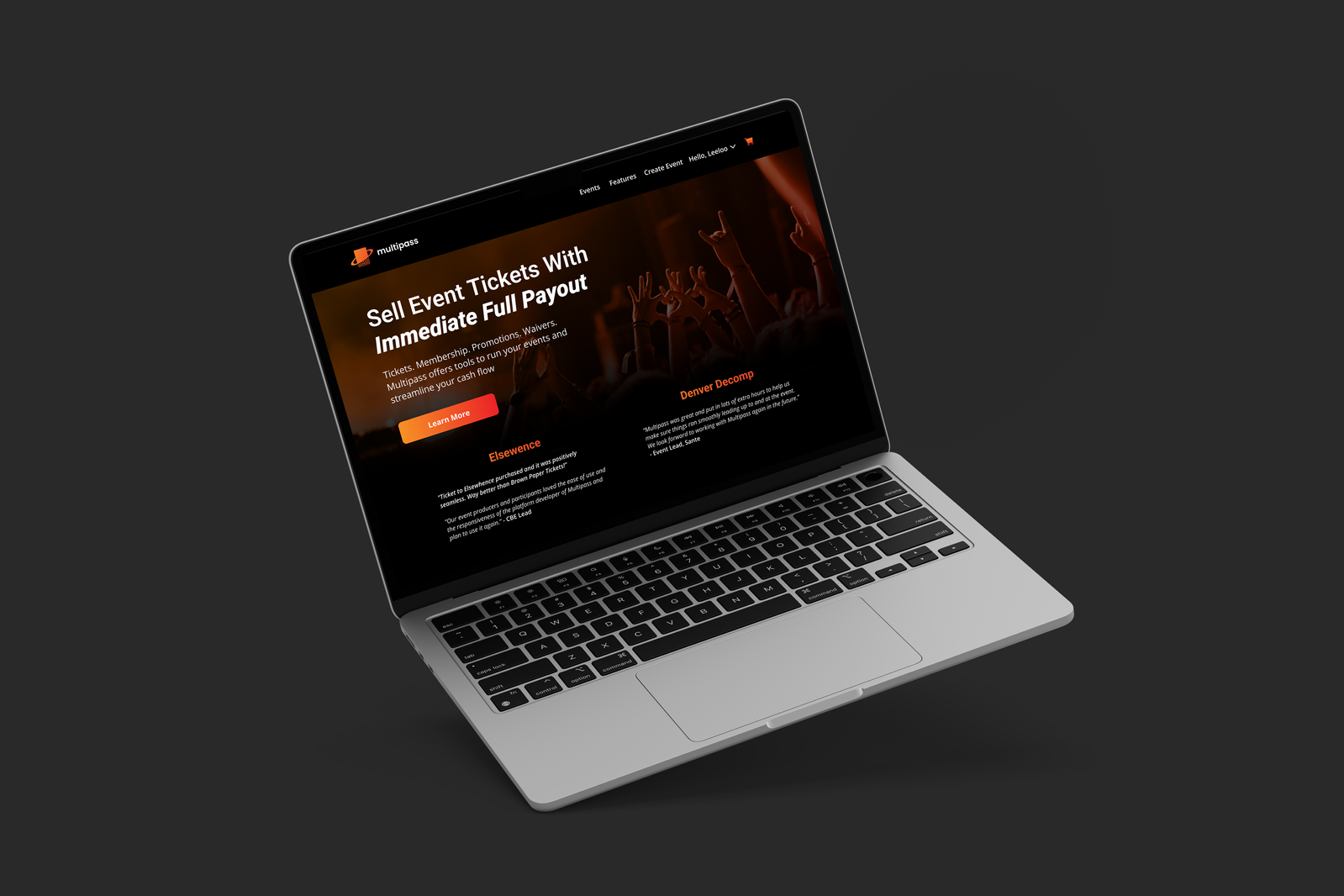
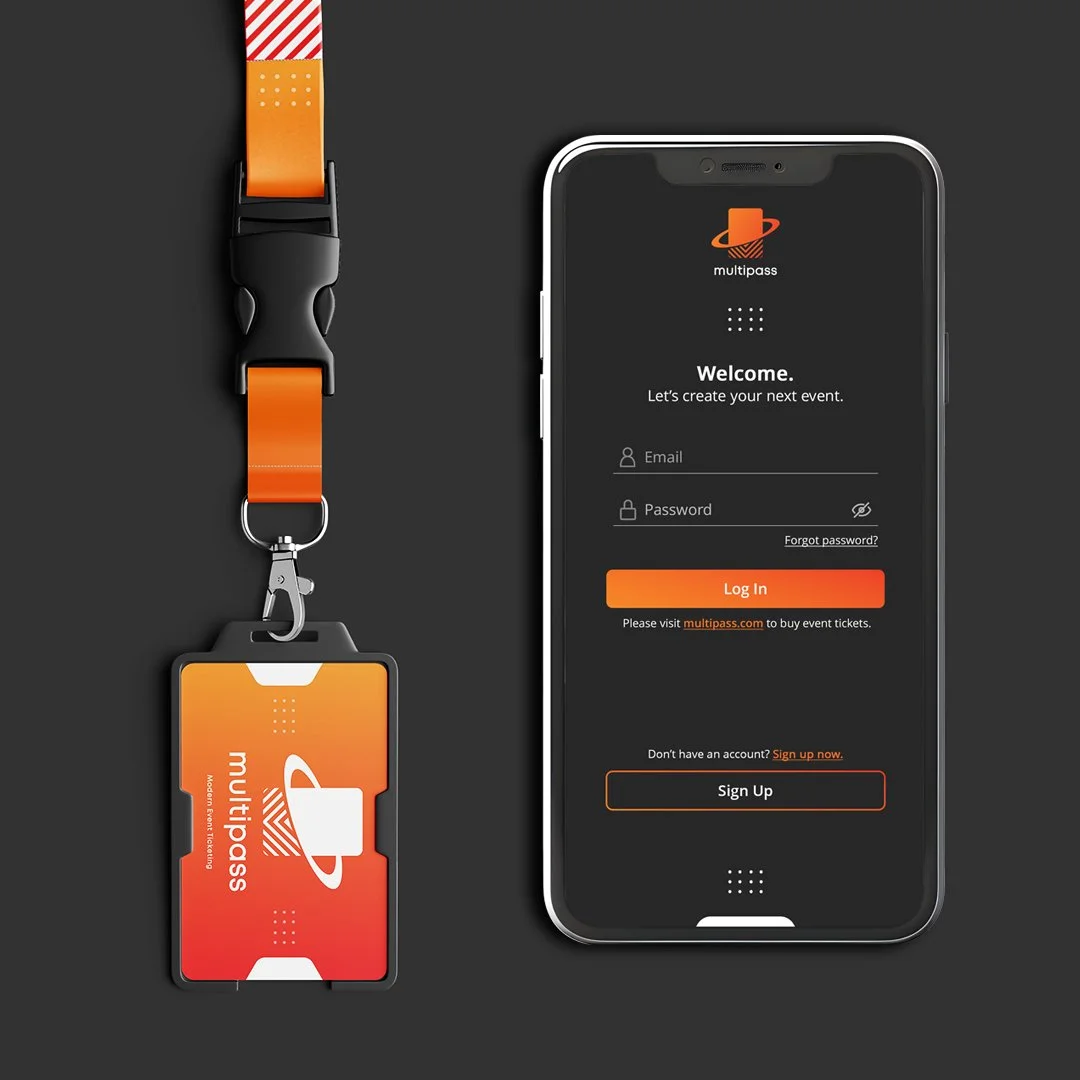
2023: Multipass 1.0
There was a specific request for the logo shape is based on a proxy card.  With that in mind, I based the color palette and style are connected to the movie’s character Leeloo. Courageous and bold, but warm and minimal.  I also created simple interface HUD elements to give brand visual texture.

In it's first year, Multipass expanded from being used mostly for Colorado events to nationwide events and securing over millions of dollars in ticket sales, focusing on helping indy communities and their patrons not paying middle-man fees.
2024: The Meeting & Merge
Through a stroke of serendipitous networking, the founders of Multipass found their match in Grupo—a kindred spirit also on a mission to uplift independent communities and solve event headaches for planners and attendees alike.

Multipass brought a rock-solid visual identity and back-end engineering to the table. Grupo arrived with boundless energy and a gift for front-end prototyping. Together, they saw not just a partnership, but the makings of something neither could build alone.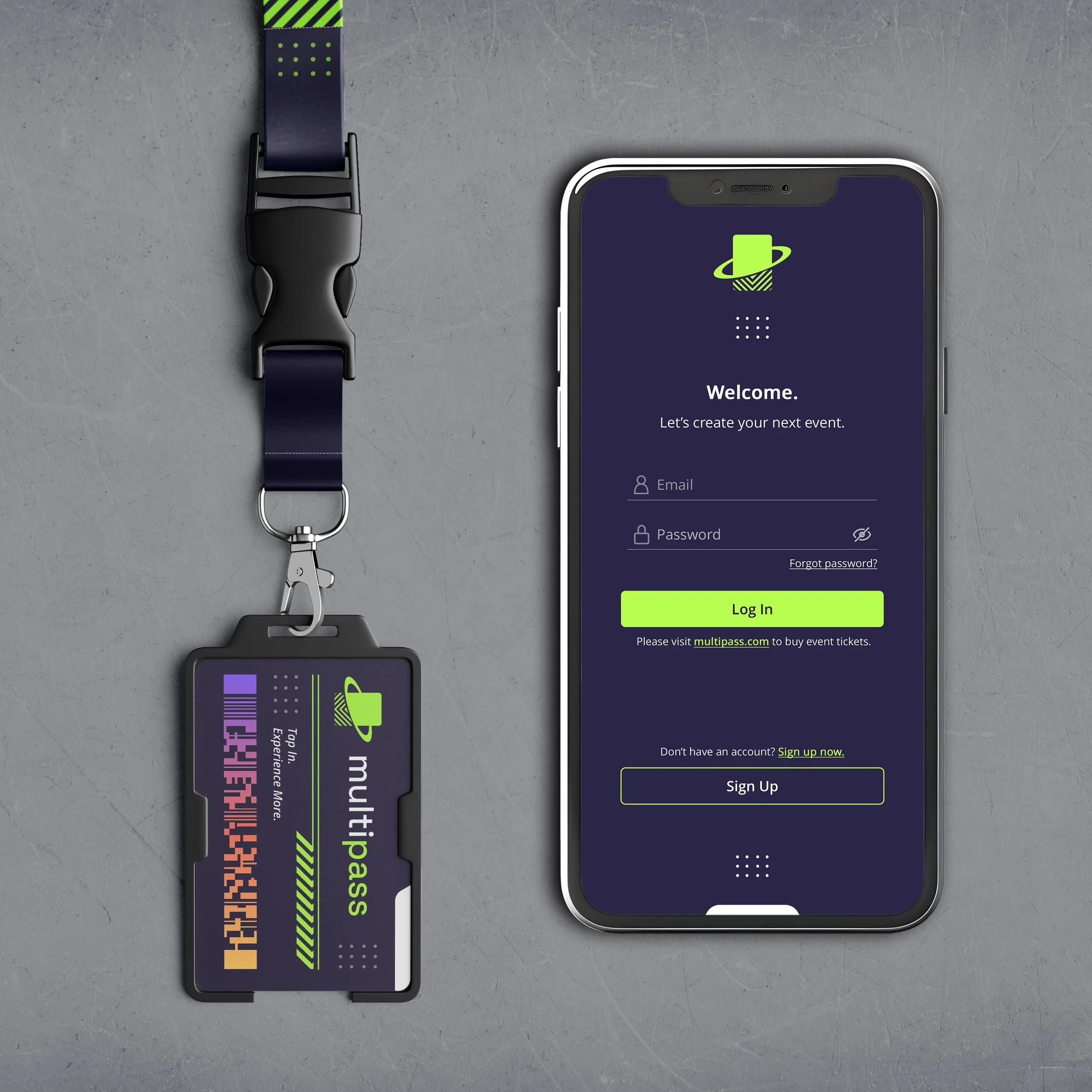
2025: Multipass 2.0
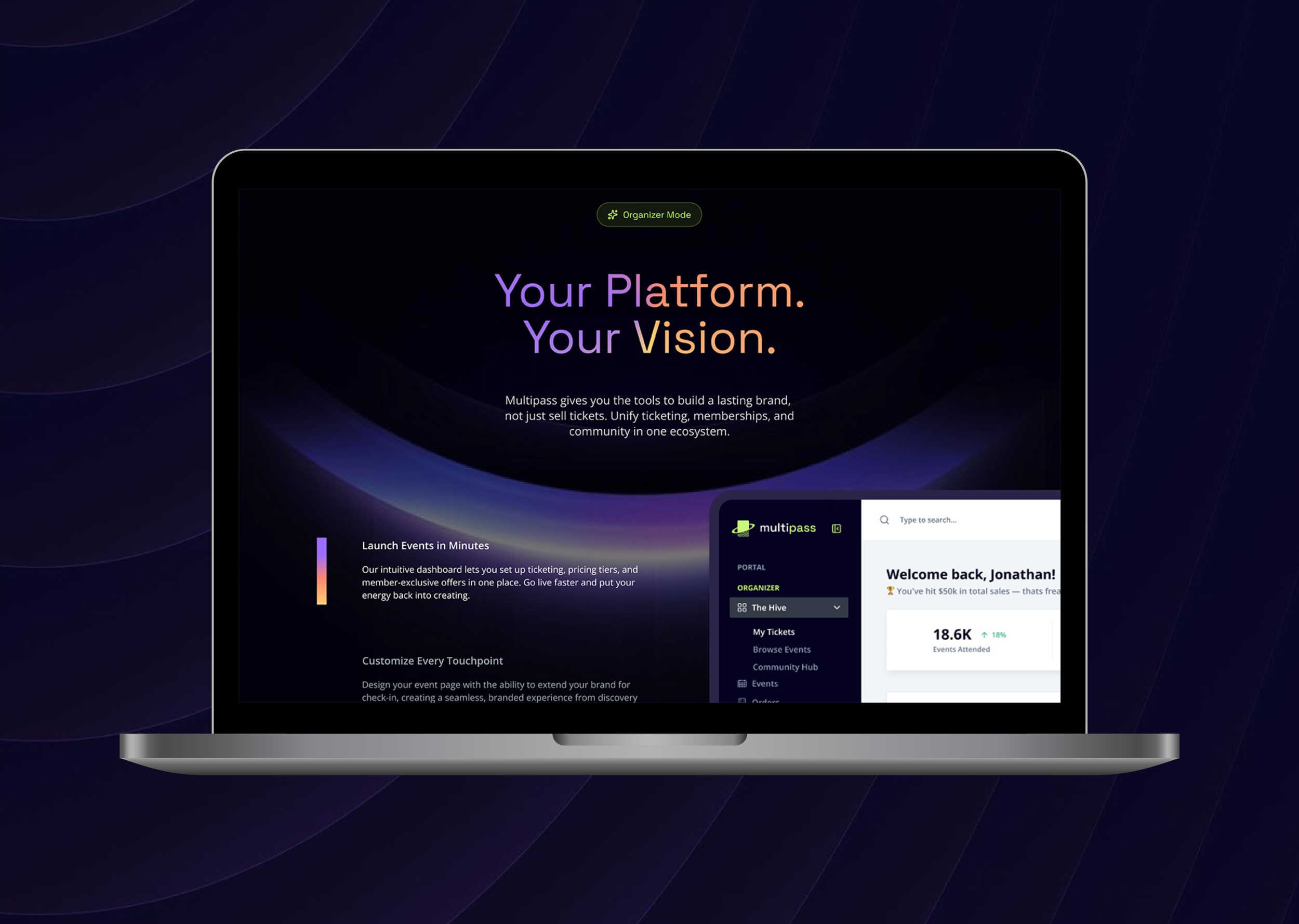
When Multipass and Grupo began to merge, I faced a question: how do you unite two identities into one seamless ecosystem? Multipass gives organizers total control by unifying every logistical touchpoint—and our brand needed to reflect that same clarity.

We started with a color update, but with just this change we can see visually that the platform looks towards Web3 and decentralization—subtle nods to distributed ownership.